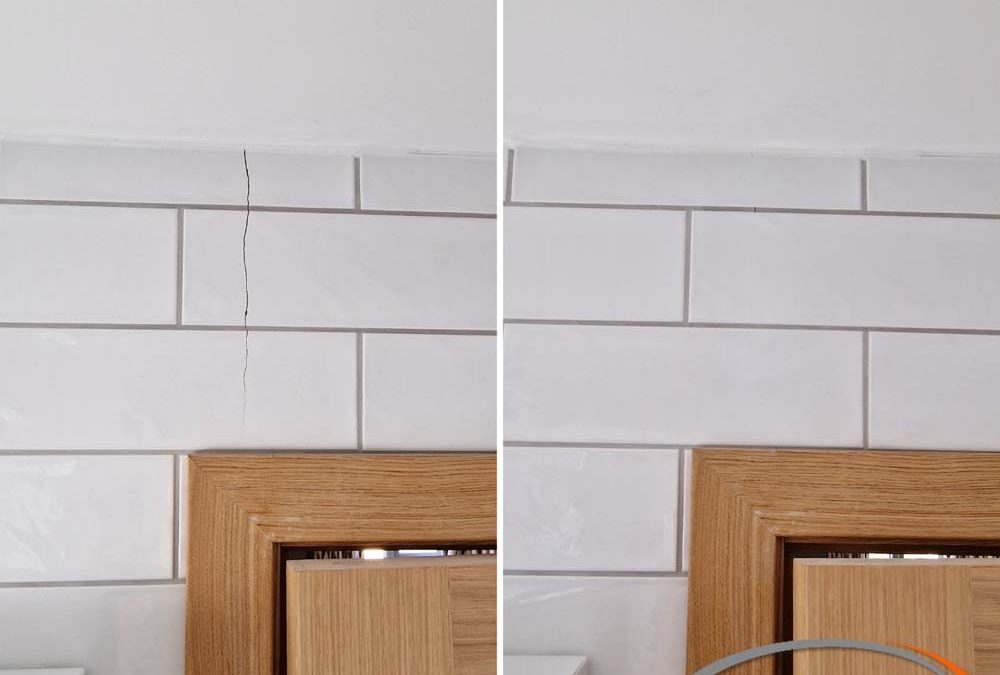
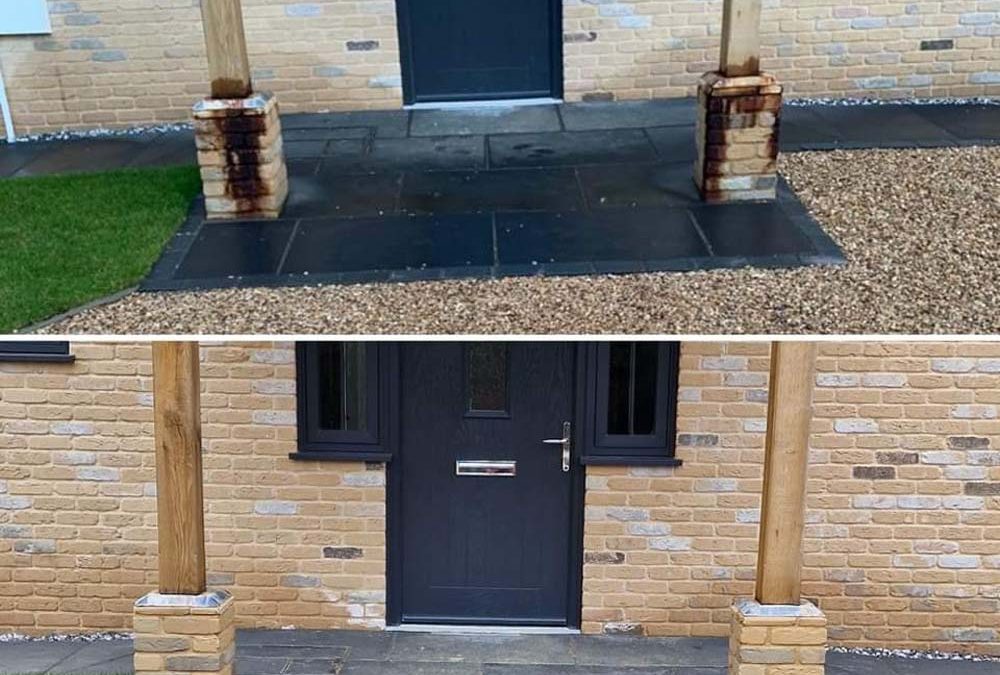
When brickwork does not match, a small area draws every eye on the street.
A new extension built with bricks that read lighter than the house. Replacement bricks that came out too dark. A patch repair that sits in the wall like plaster.
Brick tinting changes the colour of the existing brickwork so those areas blend, without painting over or covering the masonry. If you want the process itself, we have covered what brick tinting is separately. This is about the results and what drives the price.
Brick tinting before and after: what a good result looks like
The result you are after is not a wall that looks treated. It is a section that stops drawing attention to itself. From normal viewing distance, the treated brickwork should sit inside the elevation rather than reading as a block of colour within it.
The examples worth looking at are a new extension matched to an older house, replacement bricks blended into an existing wall, and a patch repair that used to stand out. The strongest ones are the least dramatic.
Brick tinting cost: what drives the price
There is no single figure, and anyone quoting one without seeing the wall is guessing. What moves the price:
- The size of the area and how many bricks need treating
- The type and condition of the brick
- How far apart the existing colours are
- How much colour matching the job needs
- Access, height and whether scaffolding is required
A handful of mismatched bricks at ground level is a different job from blending a full elevation two storeys up. Photographs showing both the bricks you want changed and the brickwork they need to match give us enough to start from.
Brick tinting and colour matching
Almost no brick wall is one colour.
Look closely at an established elevation, and several tones are running through it, from the original firing, from weathering, and from decades of whatever the weather has done to that side of the building.
Which is why tinting is not a matter of picking red, brown or buff. Getting a section to belong often means introducing several tones across it to recreate the variation in the wall around it. The further apart the new and old brickwork are, the more detailed that gets.
The aim is not to make every brick identical. It is to make the treated section look like it was always part of the wall.
Brick tinting a new extension to an older house
This is the job we get asked about most.
Even where real effort went into choosing bricks for an extension, the new masonry usually still reads differently once it is up. The base colour is slightly off, the variation between individual bricks is tighter, and the weathering is not there at all. Original brickwork has had thirty years in the rain. The extension has had three weeks.
Tinting narrows that gap. Not by making the whole house one uniform colour, but by introducing tones that let the new section sit alongside the original. The same applies to infill work, repaired elevations and individually replaced bricks, and to modernising older brickwork where the goal is changing the look rather than matching it.
Brick tinting against replacing, painting or rendering
Replacing mismatched bricks sounds like the direct answer. It means sourcing a closer brick, taking out the existing ones, disposing of them, rebuilding the section, matching the mortar and disturbing finished work. Bricks sold under the same name vary between batches, and a brick that looks close when new will not necessarily weather like the wall around it. You can do all of that and still have a visible difference.
Painting covers the brick. It solves a colour mismatch by replacing it with a different obvious difference, and you lose the masonry itself.
Rendering transforms a building, but it is a much bigger decision than correcting one mismatched section, and it hides the brick entirely. Tinting keeps the brick finish visible, which matters where the brickwork is part of why the property looks the way it does. It sits within our brickwork repairs and tinting service.
When brick tinting is not the answer
Not every brickwork problem is a colour problem.
Bricks that are cracked, loose, badly deteriorated or affected by something structural need dealing with properly. Tinting corrects appearance, and it should not be used to disguise masonry that needs repairing or rebuilding.
The condition and type of brick also affect what result is achievable, which is another reason the wall gets assessed before anyone quotes a colour match.
Brick tinting for developers and housebuilders
Batch variation, a later repair or a substituted brick can be structurally fine and still stand out on a finished elevation at inspection. Taking down sound masonry adds time, labour and waste at the worst point in a programme. Where the issue is purely colour, tinting deals with it, and there is a commercial brickwork and tinting service for larger sites, refurbishments and managed housing.
Get a quote for brick tinting
If part of your brickwork does not match, replacing or covering it may not be your only option.
Send your local Snag Doctor team clear photographs of the affected bricks and the elevation around them.
We will assess the area, tell you whether tinting is suitable and give you a free, no-obligation quote for the specific job.